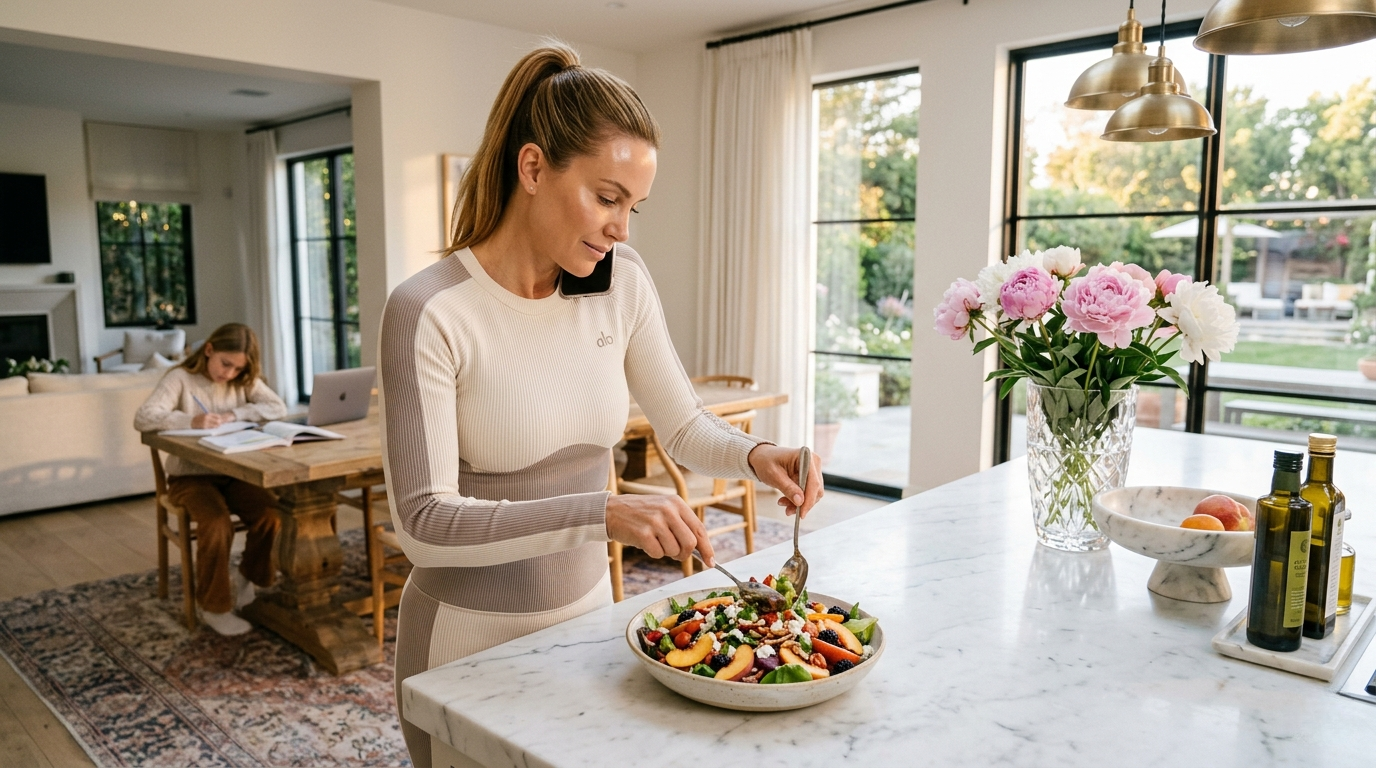
I want to talk about logistics because nobody talks about logistics and logistics are the actual reason most things in my life don’t happen.
I have three kids. I have a job. I have a mother in another state who calls. The idea that I was going to add a recurring pharmacy errand into this rotation was, frankly, comedy.
GLP-1, when I started looking into it, felt like a thing that was going to require me to be a more-organized version of myself. I am not a more-organized version of myself. I am the version of myself that I am. If a health intervention required me to become someone different to access it, I wasn’t going to access it. The whole reason I’m now actually on GLP-1, almost a year later, is that I found a version of the process that fit the actual person I already am.
The pharmacy is a magical place that closes when I am free
I want to say this clearly. Pharmacies, around me, are open during the hours when I am at work. They are closed during the hours when I am not. The Venn diagram of when they are open and when I am available is two circles that do not touch.
This isn’t a complaint, exactly. It’s a fact. And it had, for years, kept me from doing a lot of things I knew I should be doing for myself.
GLP-1, in the old version of how this would have worked, would have required me to coordinate a monthly pickup. Which would have required me to either take time off work or send my husband, who would have had to take time off his work, to do an errand for me. Which would have started a whole chain of small resentments that would have, over a year, become a big resentment. I was not signing up for that. I would have rather stayed where I was.
I can do almost everything from my phone now
I cannot tell you how much this changed. I order it on my phone. I confirm the timing on my phone. It arrives at my house on a day I picked.
My phone is already in my hand approximately four hundred times a day. Asking my phone to do one more small task is not a heavy ask. Asking my body to drive across town between 9 and 5 on a Tuesday was a heavy ask. The fact that this got moved into a thing my phone does is not small. It’s the difference between doing it and not doing it.
The consultation. The renewal. The dose adjustments. The follow-up questions. All of it happens through one app on my phone, between the small moments of my day when I’m waiting in a school pickup line or sitting at a soccer practice. None of it requires a single dedicated chunk of time that I don’t have. That alone makes the difference between sustainable and not.
I don’t have to be a different kind of person to do this
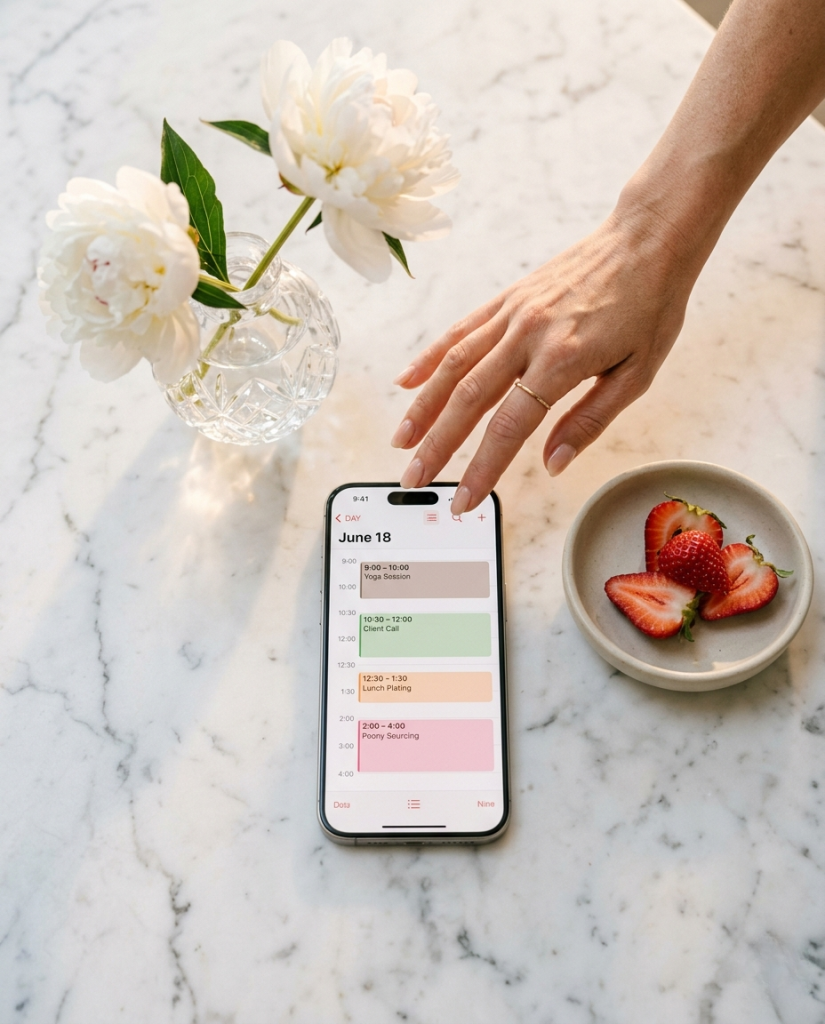
This is the part I want to underline. I am not a more-organized person now. I have not become disciplined. I have not woken up earlier. I have not bought a planner that I actually use.
The system is just less hostile to who I already am. Which means I can do the thing without first becoming a person I’m not. That’s a kind of accessibility that doesn’t get talked about.
Most health interventions implicitly assume you have time, organizational capacity, and emotional bandwidth to spare. Most women I know in their forties have none of those things to spare. The intervention that fits the actual woman is going to outperform the intervention that requires her to first become a different woman, by a wide margin, every time. GLP-1 done through telehealth — done through my phone — is the rare intervention that fits the woman I actually am.
Flexibility is a luxury I didn’t know I needed
If the kid gets sick, I can move the timing. If I’m traveling, I can adjust. If a delivery doesn’t show up on the day it’s supposed to, somebody fixes it without me needing to drive anywhere.
In my old life, any one of these small disruptions would have collapsed the whole plan and I would have given up. The plan would not have survived a sick child. This plan does.
The single biggest predictor of whether a busy woman sticks with a health intervention, in my unscientific opinion based on talking to a lot of busy women, is how forgiving the system is when life gets disrupted. Because life always gets disrupted. A system that requires perfect execution is a system that will not survive the first illness, the first work trip, the first family emergency. GLP-1 delivered to my door, with consultations that can be rescheduled with two taps, has survived all three of those things in the last year. I have, accordingly, stayed on it.
Starting is the hardest part of anything
I think this is the one I’d want every busy woman reading this to take away. The barrier to entry is the whole game. If starting feels like a project, you won’t start.
If starting feels like one more small thing in a day that’s already full of small things — you will start. And starting, it turns out, is more than half the battle. Continuing, in my experience, has been easier than starting was. Which is the opposite of what they tell you.
If you’ve been putting off GLP-1 because the logistics felt heavy, I’d gently suggest that the logistics have changed more than you might realize. The version of GLP-1 access available now is not the version that was available three years ago. The path of least resistance is now genuinely a path of least resistance. Which means the only thing standing between you and the option is, as it usually turns out, the decision itself. The system is no longer the barrier. Which is, all things considered, a pretty radical thing.