
She was diagnosed in 1987. I was a kid. I remember the orange juice in the fridge that I wasn’t supposed to drink, and I remember her testing her blood with one of those big old machines on the kitchen table, and I remember being scared without knowing of what.
We didn’t talk about it. Nobody in my family talked about anything. That was the era.
I’m fifty-five now and on GLP-1. The conversation in my family has slowly shifted, over the last few years, from one nobody had to one we’re starting to actually have. Three of my cousins are on GLP-1 too. We talk about it now, openly, in family group chats and at Sunday dinners. My grandmother did not have any of this. I do. I think about that constantly.
Type 2 runs in my family and I tried not to know that
Both her sisters had it. My uncle. My mother, eventually. I am the next in line. I have been the next in line for as long as I’ve been an adult and I have been, until recently, very committed to pretending I didn’t know.
There’s a particular kind of denial you develop when you grow up around a thing. You see it. You log it. And then you put it in a drawer in your mind that you don’t open.
My bloodwork started doing concerning things in my late forties. Fasting glucose creeping up. A1C inching toward the line nobody wants to cross. My doctor, who is gentler than most, said: we’re not there yet, but we’re heading there, and we should probably do something. That conversation is what eventually got me to consider GLP-1.
The pancreas doesn’t get a lot of press
We talk about hearts. We talk about lungs. The pancreas just kind of sits there, doing its job, until one day it isn’t doing its job and then suddenly it’s the only organ anyone in your family talks about, ever.
I’d never really thought about mine. I’d never thanked it. I had been treating it, for years, like an employee I was actively trying to fire.
GLP-1, as far as I understand it, helps the pancreas in particular. It reduces the load on the system that the pancreas is supposed to be managing. For someone like me, whose pancreas has my grandmother and great-aunts in its history, this matters more than I can really articulate. I’m not just trying to lose weight. I’m trying to give a specific organ a fighting chance.
What it means to help the pancreas instead of fight it
I’m careful here because I’m not a doctor and I don’t want to be one. But the conceptual shift was big for me. Instead of thinking of my body as a thing to win against, I started thinking of one specific small organ as a thing to support.
That’s a different posture. It changes what you put on a plate. It changes what time you eat dinner. It changes what you do when you find yourself standing in front of the cabinet at 10pm.
And it changes the way you frame GLP-1 itself. It’s not a vanity intervention. It’s not even, in my situation, primarily a weight intervention. It’s a metabolic support intervention. The fact that it also has weight effects is, for me at least, a downstream benefit. The upstream benefit is the one that keeps me consistent.
Prevention is a boring word for an exciting thing
It doesn’t sell. Prevention. It doesn’t have a before-and-after photo. There’s no dramatic story. You just, slowly, walk away from the thing your family has been walking toward.
Which, in the privacy of your own life, is one of the most exciting things you can possibly do. It just doesn’t look like anything from the outside.
My A1C has come down a meaningful amount in the year I’ve been on GLP-1. I’m not in the danger zone anymore. I’m not even particularly close to it. My doctor uses the word reversal, cautiously, when we talk about my numbers. I don’t use that word myself yet. I’m not ready. But I’m closer to using it than I have ever been, and that is, for someone with my family history, an enormous thing.
I think about her differently now
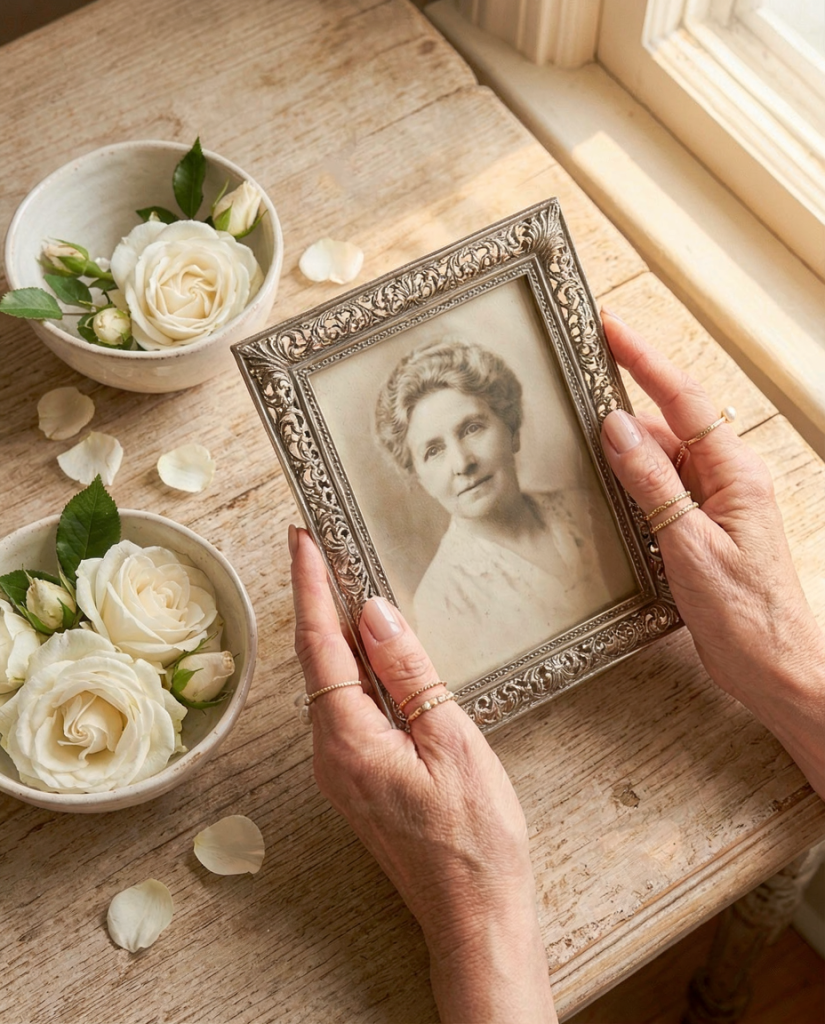
My grandmother. I think about what she might have done with information we have now, and access we have now, and conversations she didn’t get to have.
I’m not trying to romanticize it. I just know that she didn’t have a lot of options. And I do. And not using mine, when she didn’t get any, feels like a thing I’m not willing to do anymore.
If type 2 runs in your family and you’ve been putting off having the metabolic conversation with a doctor, please consider that the conversation is different now than it was even five years ago. GLP-1 is part of why. There are options now that weren’t on the table for our mothers and grandmothers. Using them, when our families didn’t get to, is not vanity. It is, in some quiet way, paying a debt forward. I’m choosing to see it that way. It helps me stay consistent on the hard days.